
King Seiko or Grand Seiko: the case for the other one
Two houses, one rivalry, and the references collectors keep overlooking.

For most of the 1960s and early 1970s, Seiko ran two high-grade lines in parallel. Grand Seiko carried the flagship title, but King Seiko was never simply the cheaper option. It was built by a different Seiko factory, with its own design decisions, its own movements and its own idea of what a fine watch should be.
Today, Grand Seiko gets most of the attention and most of the price growth. That leaves King Seiko in an interesting position: many references offer the same era, the same Grammar of Design case work and excellent movements at a fraction of the cost of a comparable Grand Seiko.
“King Seiko was never the lesser watch. It was the other answer to the same question.”
The rivalry between the two factories pushed both lines forward. King Seiko introduced high-beat movements, sharp faceted cases and chronometer-grade versions that competed directly with Grand Seiko. For a collector, that competition is exactly what makes the references worth studying rather than dismissing.
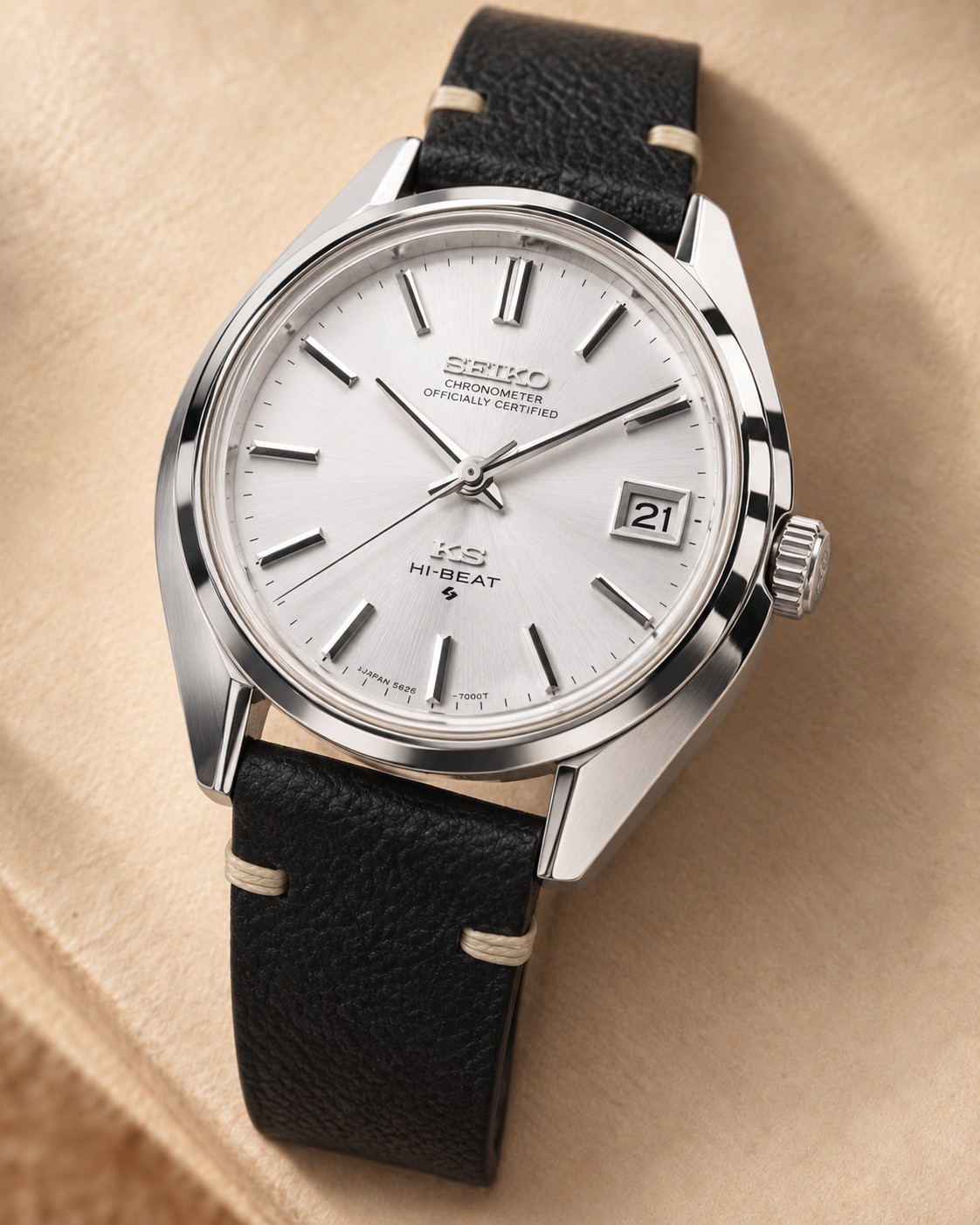
Reference notes
| Key references | 44KS / 45KS / 56KS |
| Movement | Manual and automatic, up to 36,000 bph |
| Production | 1961–1975 |
| Case | Approx. 36–38 mm |
| Market | Japan (JDM), limited export |
If you are choosing between the two, start with condition rather than the name on the dial. A sharp, unpolished King Seiko with an original dial will often be a better watch to own than a tired Grand Seiko, and it tells a more complete story about how Seiko reached the top.
Keep reading

The Seiko 7548, and why divers stopped being tools
A quartz diver that outlived its own category, and what to check before buying one.

Understanding Seiko Grand Quartz
Reference families, caliber differences and the dials that are quietly disappearing.

King Seiko or Grand Seiko: the case for the other one
Two houses, one rivalry, and the references collectors keep overlooking.